When to Dethatch Your Lawn (and How to Tell If You Even Need To)
What Thatch Is and When It Becomes a Problem
Thatch is the spongy layer of living and dead stems, roots and runners that sits between the green grass blades and the soil. It isn't made of grass clippings, which is a common myth. Clippings are mostly water and break down fast.
A thin layer is fine. Kansas State and Illinois Extension both put the line at about half an inch: under that, thatch cushions the lawn and helps it handle foot traffic. Over half an inch, it starts holding roots up in the thatch instead of the soil, sheds water, and gives insects and disease a place to live. Maryland Extension calls 1 inch or more excessive.
How to Measure Your Thatch Layer
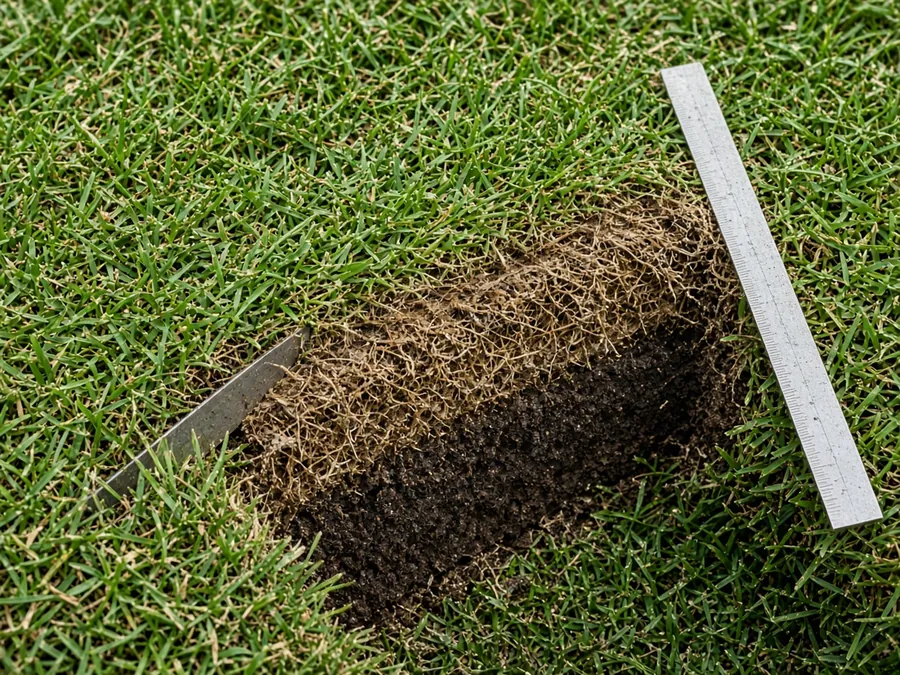
Cut a small wedge out of the lawn with a spade or knife, a few inches deep, and lift it out so you can see the side. The thatch is the brown, fibrous layer above the soil line. Hold a ruler against it. Check a few spots, since sunny and shaded areas often differ.
If it's under half an inch, you don't need to dethatch. Put the plug back, step on it, and skip the rest of this article.
Which Grasses Build Up Thatch
Some grasses spread with vigorous stems above and below ground and are more prone to thatch. Zoysiagrass, bermudagrass and Kentucky bluegrass are the usual suspects. Tall fescue and perennial ryegrass are bunch-type grasses and produce relatively little thatch, according to Kansas State.
Habits matter too. Heavy nitrogen fertilizing pushes fast growth that piles up faster than soil microbes can break it down, and acidic or compacted soil slows that breakdown.
Best Time to Dethatch
| Lawn type | Best timing | Why |
|---|---|---|
| Cool-season (bluegrass, fescue, ryegrass) | Late summer to early fall; late August is a good target | Grass recovers in cool fall weather, and it's also the best time to overseed |
| Warm-season (zoysia, bermuda) | Late spring to early summer | Grass is growing fast and fills in quickly |
Avoid dethatching when the grass is stressed by heat or drought, or just going into dormancy. You're tearing it up on purpose, so it needs good growing weather afterwards.
How to Dethatch
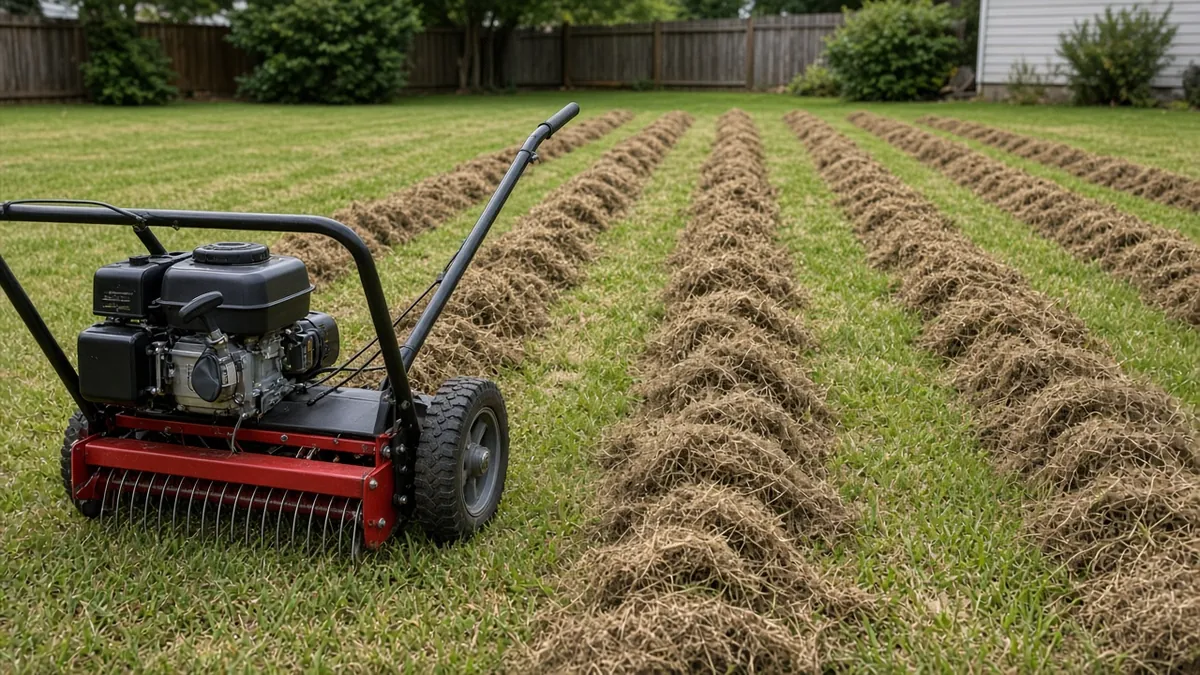
- Mow the lawn short, around 1 inch per Kansas State, so the machine can reach the thatch.
- Use a power rake or vertical mower (rentable). Set the blades to just reach the soil surface.
- Make two passes at right angles to each other.
- Rake up the debris. There will be a lot more than you expect.
- Water, and for cool-season lawns overseed right away while the soil is open.
The lawn will look rough for a couple of weeks. That's normal.
Core Aeration: the Gentler Option
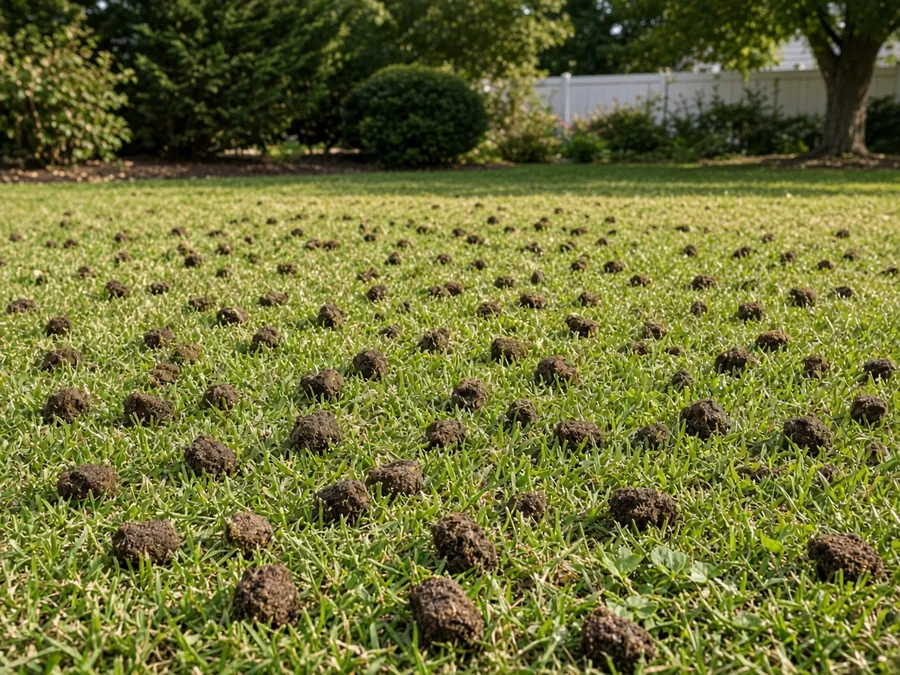
Core aeration pulls plugs of soil out of the lawn and drops them on the surface. Illinois Extension describes the cores as about 2 to 4 inches deep and roughly half to three-quarters of an inch wide. As the soil cores break down over the thatch, they bring soil microbes with them, and that helps the thatch decompose naturally.
Aerate cool-season lawns in late August through September and warm-season lawns in late May through June. Following up with a thin topdressing of compost, around 1/8 to 1/4 inch, helps even more. For a lawn that's borderline, aerating once or twice a year is often all it needs.
Frequently Asked Questions
How thick should thatch be before I dethatch?
More than about half an inch. Thatch under half an inch is normal and actually helps the lawn, according to Kansas State and Illinois Extension.
Is it better to dethatch in spring or fall?
For cool-season grasses, late summer to early fall is best, so the lawn recovers and you can overseed. Warm-season grasses like zoysia are dethatched in late spring to early summer.
Do grass clippings cause thatch?
No. Clippings break down quickly. Thatch is mostly stems, runners and roots.
Should I aerate or dethatch?
If thatch is only slightly over half an inch, core aeration is gentler and helps thatch break down over time. Heavy thatch may need power raking.
- Kansas State University Research and Extension, Thatch Control in Lawns
- University of Illinois Extension, Lawn Thatch and Core Aeration
- University of Maryland Extension, Thatch
- Missouri Botanical Garden, Thatch in Lawns