Lawn Soil pH and Lime: Do You Need It, and How Much?
Why Soil pH Matters for Grass
Soil pH controls how available nutrients are to grass roots. When soil is too acidic, nutrients like phosphorus become harder for plants to get, and the lawn can look thin and pale even if you fertilize. When it's too alkaline, iron and other micronutrients get locked up, often showing as yellowing between leaf veins.
University of Missouri and University of Delaware guides both list roughly 6.0 to 7.0 as the target range for most lawn grasses. A few, like centipedegrass, prefer more acidic soil, so check what your grass likes.
Test Before You Lime
Bagged lime is cheap and people tend to spread it every few years just because. But a lot of US soils, especially in the arid West and parts of the Midwest, are already neutral or alkaline. Adding lime there doesn't help and can make things worse.
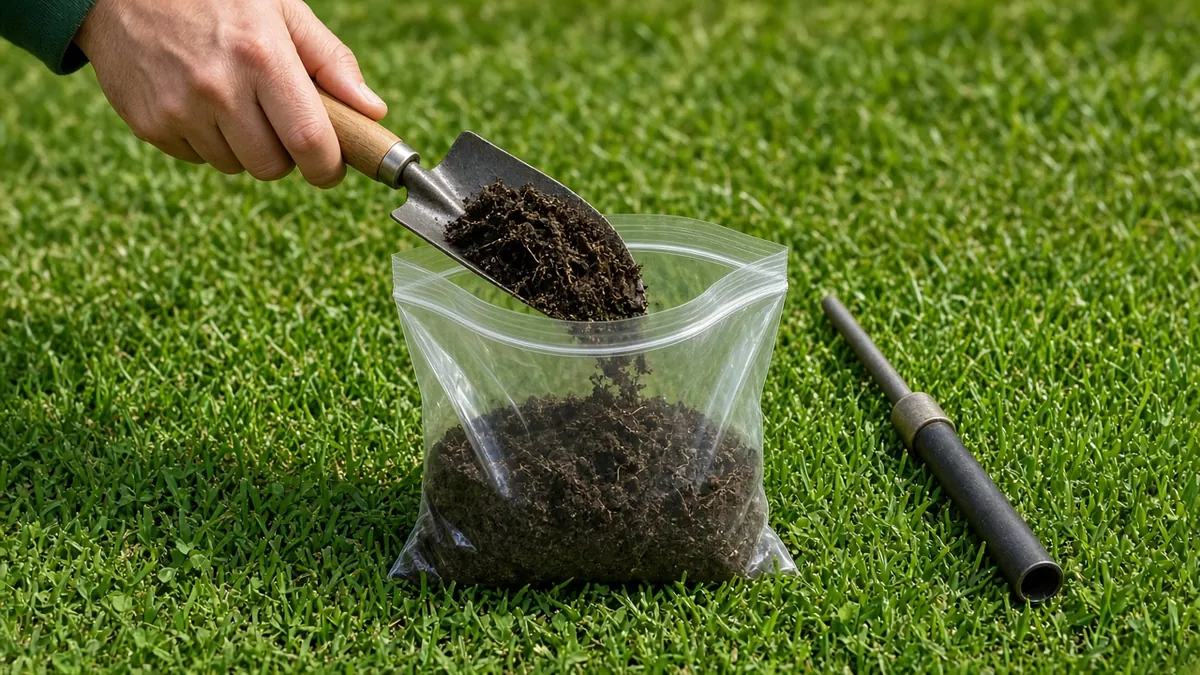
A soil test through your state's land-grant university lab usually costs a modest fee and tells you pH, a lime requirement if one exists, and nutrient levels. To take a sample:
- Use a clean trowel or soil probe and take 10 to 15 small cores from around the lawn, about 3 to 4 inches deep for established turf.
- Skip unusual spots like where the old woodpile was.
- Mix them in a clean bucket and send about a cup, following the lab's instructions.
Kansas State notes lime recommendations are based on buffer pH, not just soil pH, which is one more reason the lab number beats a guess.
How Much Lime to Apply
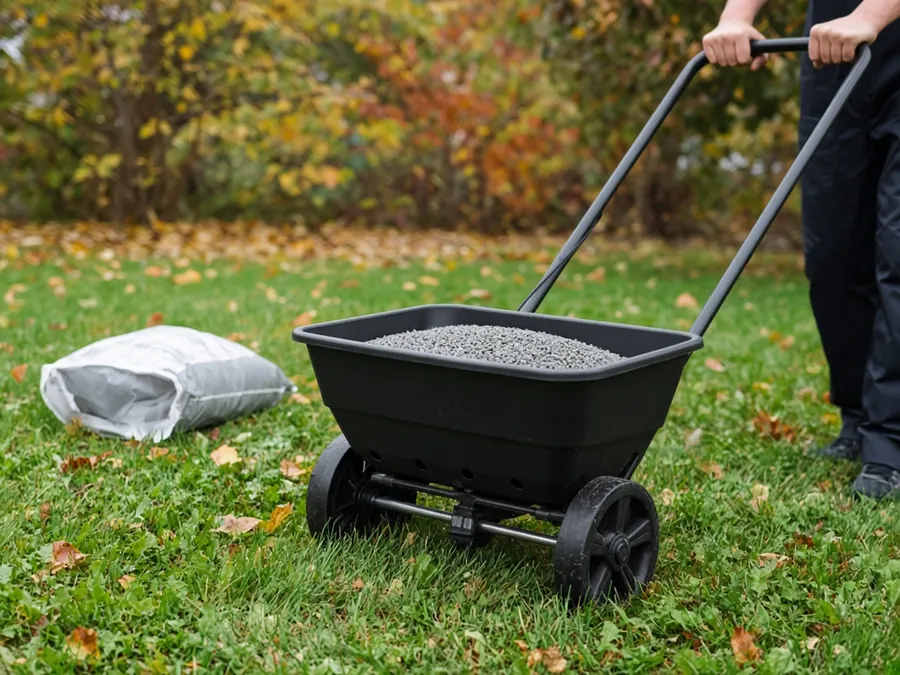
Use the rate on your soil test report. If the recommendation is large, split it.
- Don't apply more than about 50 lb per 1,000 sq ft at one time on an established lawn.
- Larger recommendations are split into multiple applications, often spring and fall.
- Pelletized lime spreads easily with a drop or broadcast spreader and is less dusty than powdered.
- Lime works slowly. It can take months to change pH noticeably, so retest in a couple of years instead of reapplying on a schedule.
Spring and fall are both fine times to lime. Freeze-thaw cycles in winter help work it into the soil, which is why fall application is popular in northern states.
Lowering pH With Sulfur
Lowering pH is slower and harder than raising it. Elemental sulfur is the usual material. On established turf, the University of Wisconsin and University of Arkansas guides caution against more than about 10 lb per 1,000 sq ft per application, since higher rates can burn the grass. Soils with free lime (calcareous soils) are hard to acidify at all, and your soil test lab can tell you if that's the case.
Moss Doesn't Always Mean Acid Soil
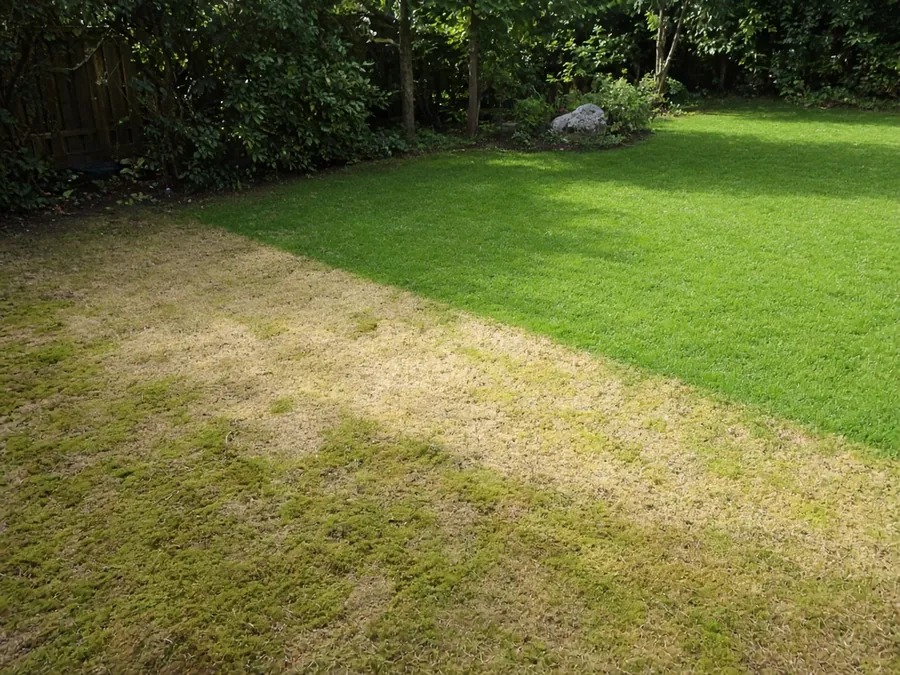
Moss in a lawn is often blamed on acidity. Sometimes that's part of it, but moss mostly takes over where grass is weak: heavy shade, compacted soil, poor drainage, low fertility. Liming a shady, compacted lawn won't make grass grow there if the pH was fine to begin with. Test first, then fix whichever condition is really holding the grass back.
Frequently Asked Questions
What pH should my lawn soil be?
Most lawn grasses do best between about 6.0 and 7.0, according to University of Missouri and University of Delaware guides.
How much lime should I put on my lawn?
Follow your soil test. As a limit, don't apply more than about 50 pounds per 1,000 square feet at once; split larger amounts.
When is the best time to lime a lawn?
Spring or fall both work. Fall is popular in colder areas because freezing and thawing help move lime into the soil.
Does moss mean I need lime?
Not necessarily. Moss usually signals shade, compaction, poor drainage or low fertility. A soil test tells you if pH is really the issue.
- University of Missouri Extension G6954, Lawn Soil Testing and Liming
- University of Delaware Cooperative Extension, Liming Lawns
- Kansas State University MF2311, Soil Test Interpretations and Recommendations
- University of Wisconsin-Madison Extension A2303, Lawn Fertilization
- University of Arkansas Cooperative Extension FSA-6134, Soil pH and Turf