How Much Should You Water Your Lawn? (1 Inch Rule, Tuna Can Test, Best Time)
The 1-Inch-Per-Week Guideline
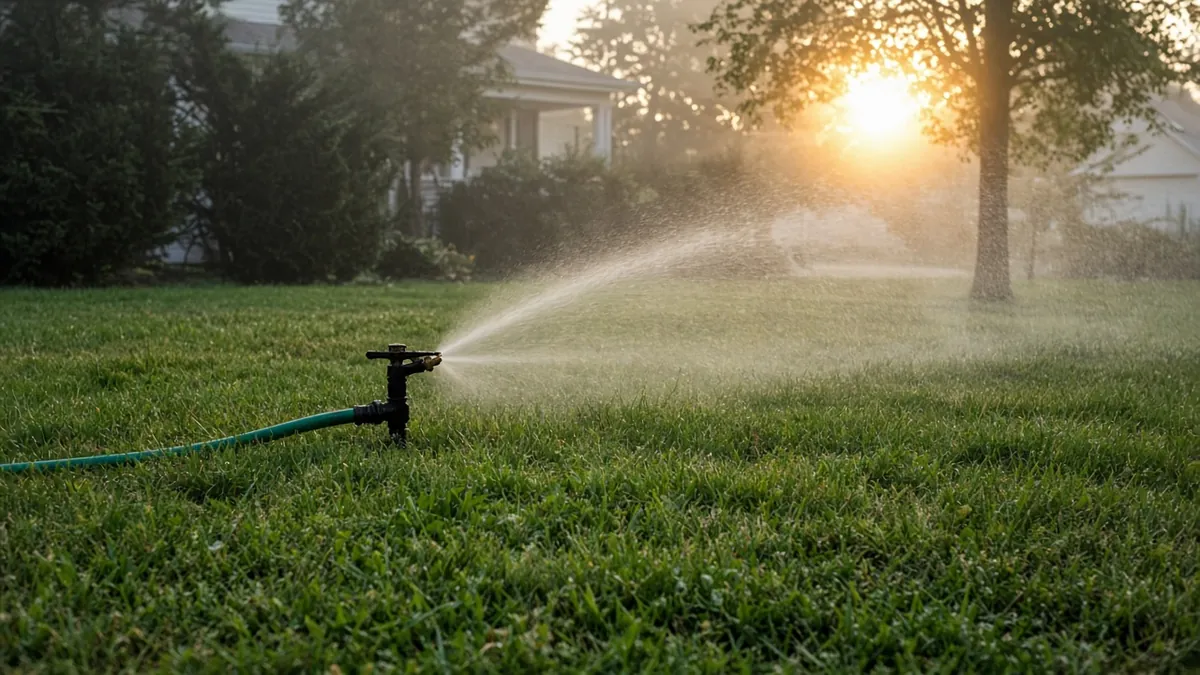
The number you'll see from most extension services is about 1 inch of water per week for an actively growing lawn. UGA's Fulton County office repeats it for cool-season lawns in late spring and reminds homeowners that rainfall counts toward that inch, so adjust irrigation after a rainy week.
One inch is a starting point, not a law. Sandy soils drain fast and may need water more often in smaller amounts. Heavy clay holds water but takes it in slowly, so runoff is the bigger risk. Hot, windy weather pushes the need up, and cool weather pulls it down.
Deep and Infrequent Beats Light and Daily
A quick daily sprinkle keeps the top inch of soil damp and nothing below it. Grass roots follow the water, so they stay shallow and the lawn wilts the moment you miss a day. Watering deeply and less often wets the soil 4 to 6 inches down, and roots grow down to meet it.
For a lot of lawns that means one or two good waterings a week instead of a few minutes every day. If water starts running off before you hit your target, split the run into two shorter cycles with a break in between so it can soak in.
How to Measure Your Sprinkler With the Tuna Can Test
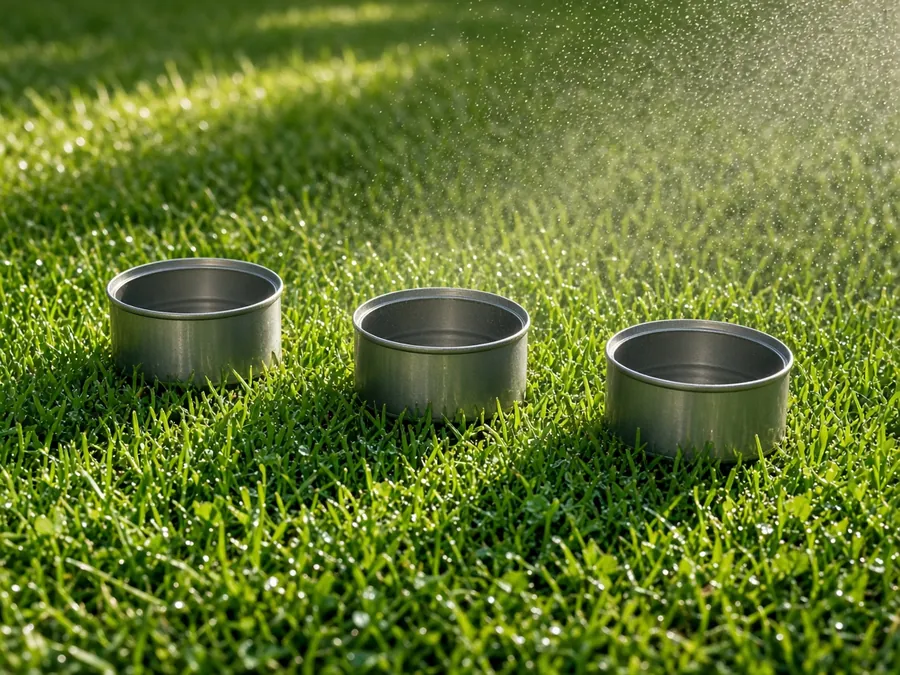
You can't know how long to run a sprinkler until you know how fast it puts water down, and that varies a lot between sprinkler types and water pressure. The tuna can test, recommended by Washington State and UC IPM among others, takes about half an hour.
- Set out several empty straight-sided cans (tuna or cat food cans work) scattered across the area one sprinkler covers.
- Run the sprinkler for a set time, like 15 or 30 minutes.
- Measure the water depth in each can with a ruler and average them.
- Work out the run time for 1 inch. If you got 0.25 inch in 15 minutes, you need about an hour for an inch.
The cans also show you how even the coverage is. If one can has twice as much as another, you've found why one part of the lawn stays greener.
Check Soil Moisture With a Screwdriver
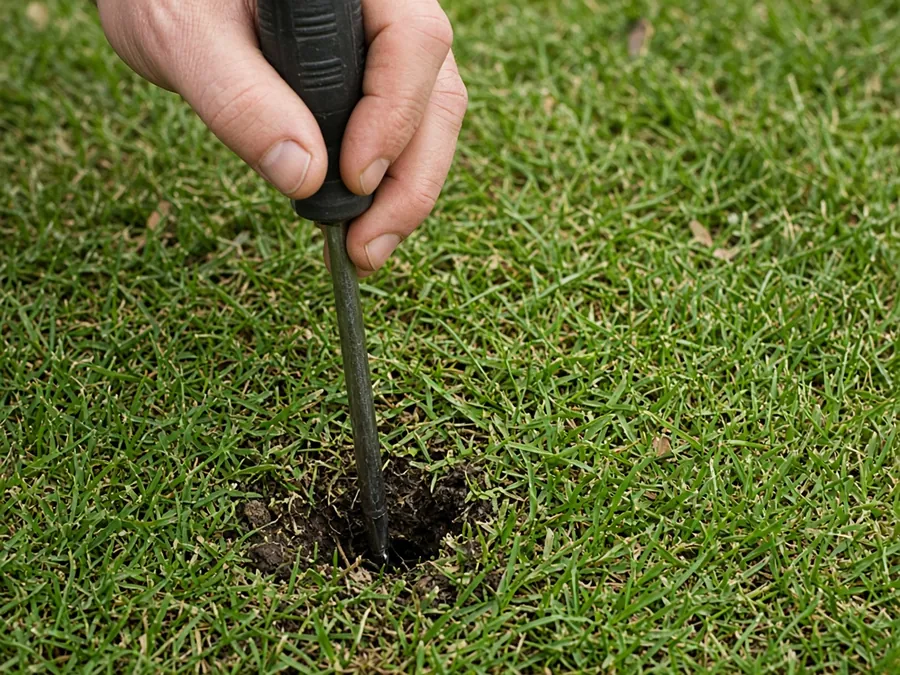
Here's a simple check after watering. Push a long screwdriver or thin metal rod into the lawn. It slides easily through moist soil and stops when it hits dry soil, so how far it goes tells you roughly how deep the water got. If it stops at 2 inches, run longer next time. If it slides past 6 inches easily, you can probably cut back.
Best Time of Day to Water
Iowa State Extension recommends early morning, roughly 5 to 9 a.m. It's cooler and usually calmer then, so less water is lost to evaporation and wind, and the grass dries off during the day. Watering in the evening leaves the blades wet overnight, which favors some lawn diseases. Midday watering isn't harmful to the grass, it just wastes more water.
What About Summer Dormancy?
Cool-season grasses like Kentucky bluegrass can go dormant and turn brown during a long summer drought, then green up again when rain and cooler weather return. If you let a lawn go dormant, skip mowing it while it's brown. What you shouldn't do is bounce back and forth, watering enough to break dormancy then stopping again, because that drains the plant's reserves. Pick one approach for the summer and stick with it.
Frequently Asked Questions
How long should I water my lawn?
It depends on your sprinkler. Use the tuna can test to measure how much water it puts down in 15 or 30 minutes, then calculate the run time for about 1 inch per week, split into one or two waterings.
Is it better to water every day or once a week?
Deep, infrequent watering is better for most lawns. It wets the soil 4 to 6 inches deep and encourages deeper roots, while daily light watering keeps roots shallow.
What time should I water my lawn?
Early morning, roughly 5 to 9 a.m., per Iowa State Extension. Evening watering leaves grass wet overnight and can favor disease.
Does rain count toward the 1 inch?
Yes. Include rainfall, and a cheap rain gauge makes it easy to subtract what nature already delivered.
- Iowa State University Extension, How and when should my lawn be watered?
- Washington State University Extension, Watering Lawns in Washington
- UC IPM, Healthy Lawns - Irrigation: Determine your sprinkler output
- UGA Extension Fulton County, May Lawn Care Update (2025)
- University of Maryland Extension, Maintaining an Established Lawn