Raised Bed Soil Mix: What to Fill It With and How Much You Need
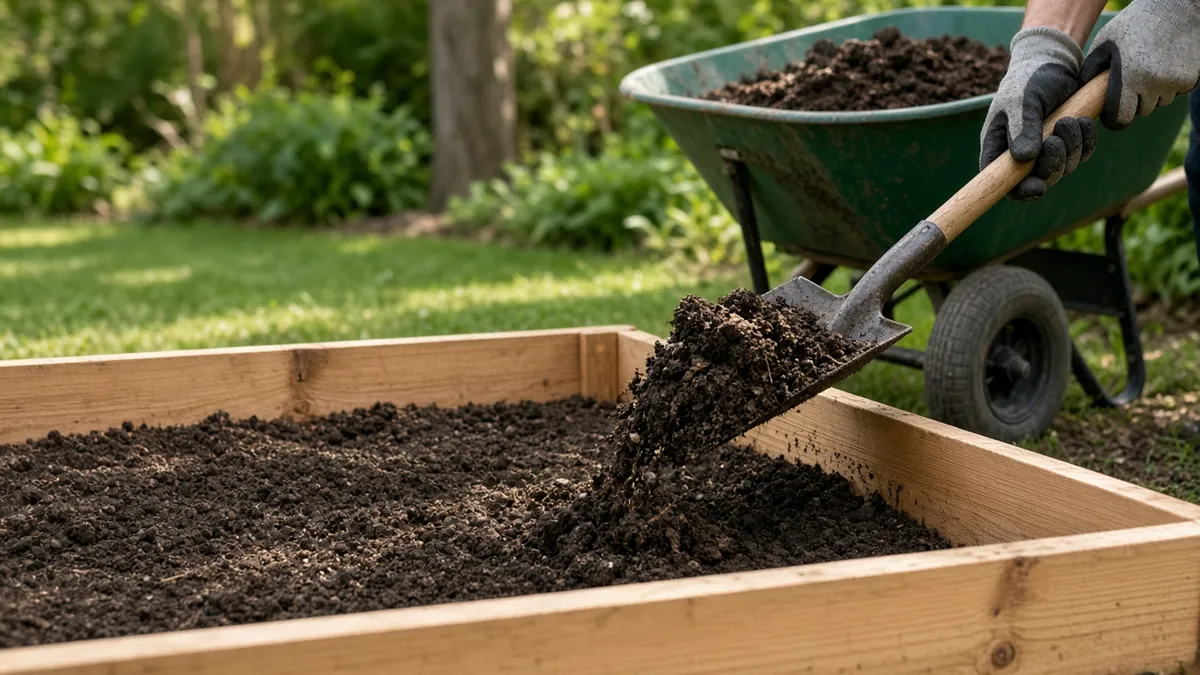
What Goes Into a Good Raised Bed Mix
A raised bed only has what you put in it. Garden soil from elsewhere in the yard is often too heavy, and straight compost is too rich and shrinks a lot as it breaks down. Most extension recommendations land on a mix of the two.
- Topsoil (about 70%): buy screened topsoil, ideally a sandy loam or loam. Ask the supplier where it came from and whether it's been screened of rocks and roots.
- Compost (about 30%): finished compost adds organic matter and nutrients and helps the soil hold water without going soggy.
Iowa State's guidance is roughly 70% topsoil and 30% compost. Some programs suggest equal parts, and both work. What matters more is starting with decent topsoil. Bagged "garden soil" products vary a lot, so read the label.
You don't need to buy fancy mixes with peat, vermiculite and several kinds of compost for a bed that sits on the ground. Those recipes are more useful for shallow beds or containers that can't drain into native soil.
How to Calculate How Much Soil You Need
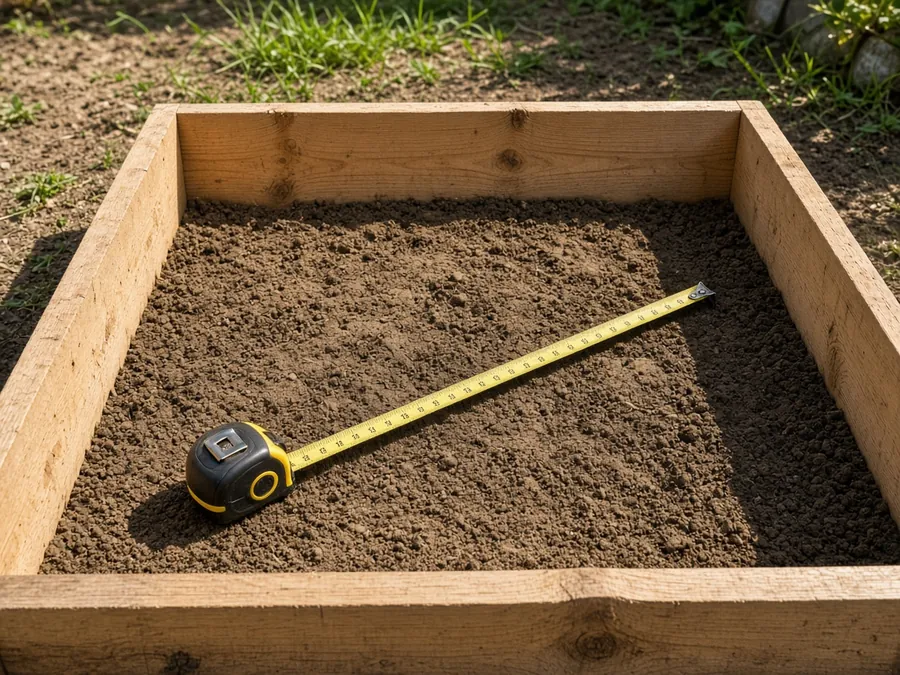
The math is simple once everything is in feet.
- Measure length, width and fill depth. Convert inches to feet (6 in. = 0.5 ft, 12 in. = 1 ft).
- Multiply them together for cubic feet.
- Divide by 27 for cubic yards, which is how bulk soil is sold.
- Add about 10% for settling.
Bagged soil is sold by the cubic foot, often in 1 or 1.5 cu. ft bags. Check the bag, because sizes differ.
Fill Chart for Common Bed Sizes
| Bed size | Depth | Cubic feet | Cubic yards | With ~10% extra |
|---|---|---|---|---|
| 4 × 4 ft | 12 in. | 16 | 0.59 | ~17.6 cu. ft |
| 4 × 8 ft | 6 in. | 16 | 0.59 | ~17.6 cu. ft |
| 4 × 8 ft | 12 in. | 32 | 1.19 | ~35 cu. ft (1.3 yd) |
| 4 × 12 ft | 12 in. | 48 | 1.78 | ~53 cu. ft (2 yd) |
| 3 × 6 ft | 18 in. | 27 | 1.00 | ~30 cu. ft (1.1 yd) |
For a 70/30 mix in a 4 × 8 × 1 ft bed, that's about 22 to 23 cubic feet of topsoil and 9 to 10 of compost. Once you're past about a yard total, bulk delivery is usually cheaper than bags, but compare locally.
Filling and Settling the Bed
Mix the topsoil and compost before it goes into the bed, or layer it and turn it with a fork. Loosen the ground under the bed first so roots can go down into native soil. Fill a bit above the rim, water it well, and let it settle for a few days before planting. It'll sink, which is why the extra 10% is there.
Keeping It Going Year After Year
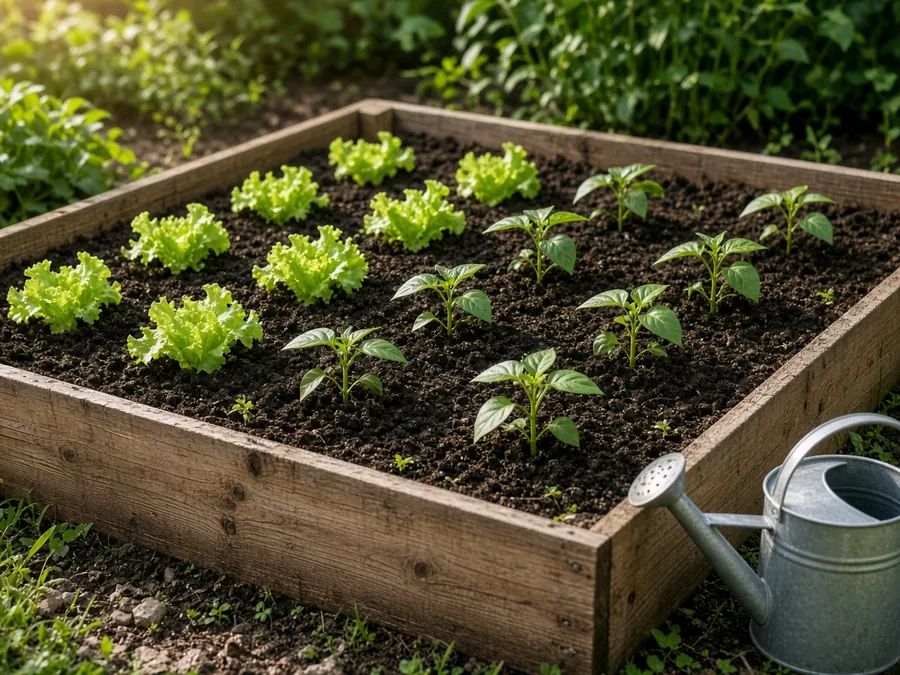
Raised bed soil gradually loses organic matter. Each year, top it up with an inch or two of compost and work it into the surface. A soil test every few years tells you whether pH or nutrients need adjusting, and your state extension office can run one for a small fee. Mulch the surface between plants to hold moisture and keep weeds down, and you'll water a lot less.
Frequently Asked Questions
What is the best soil mix for raised beds?
A blend of screened topsoil and compost. Iowa State Extension suggests about 70% topsoil and 30% compost; equal parts also works well.
How do I calculate soil for a raised bed?
Multiply length × width × depth in feet for cubic feet, divide by 27 for cubic yards, and add about 10% for settling.
How much soil does a 4x8 raised bed need?
At 12 inches deep, a 4 × 8 bed holds 32 cubic feet, about 1.19 cubic yards. At 6 inches deep, it's 16 cubic feet.
Can I fill a raised bed with just compost?
It isn't recommended. Pure compost is very rich, shrinks as it decomposes and can hold too much water. Mix it with topsoil.
- Iowa State University Extension and Outreach, Soil for Raised Beds
- University of Illinois Extension, Raised Bed Gardening
- Iowa State University Extension, Building a Raised Bed Garden