How to Plant a Tree the Right Way (Hole Size, Root Flare, Mulch)
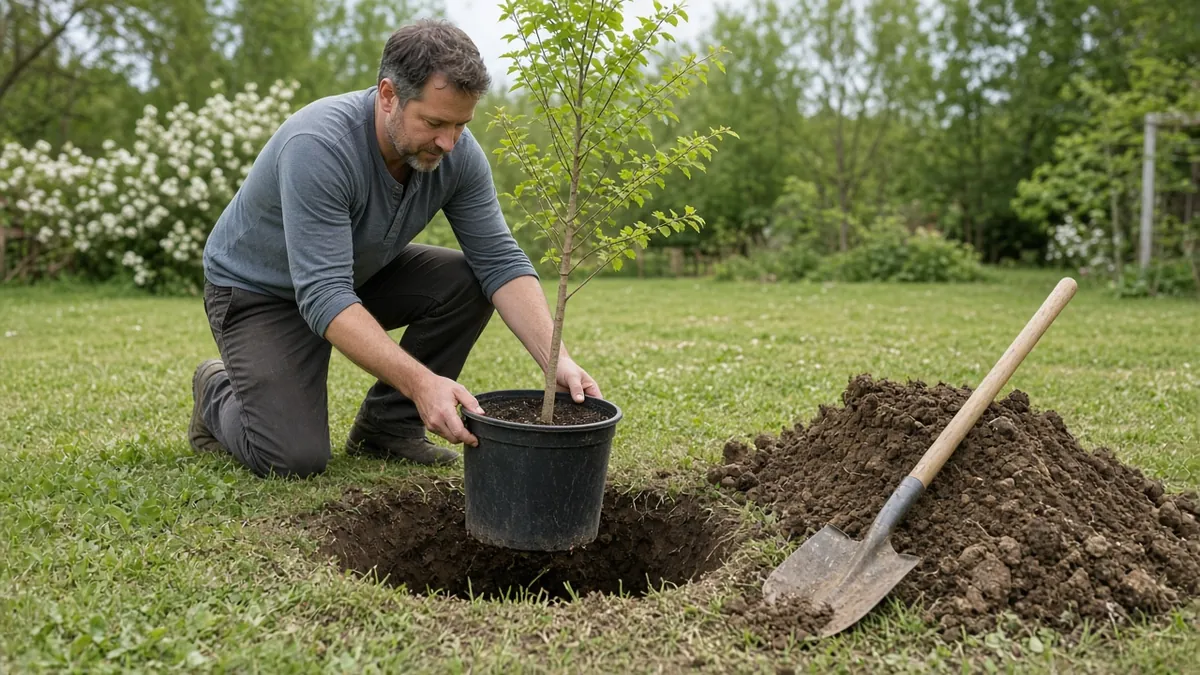
Before You Dig: Call 811 and Find the Root Flare
Call 811 (or use your state's online request) a few days before you dig, so buried utility lines get marked. It's free, and hitting a gas or power line with a shovel is not.
Next, find the root flare on the tree itself. That's the spot where the trunk spreads out into the main roots. Nursery trees are often potted or balled with extra soil piled on top, so the flare can be buried a few inches down. Gently scrape soil away from the top of the root ball until you see it. Iowa State and Ohio State both call planting too deep one of the most common reasons young trees fail.
Dig a Wide, Shallow Hole
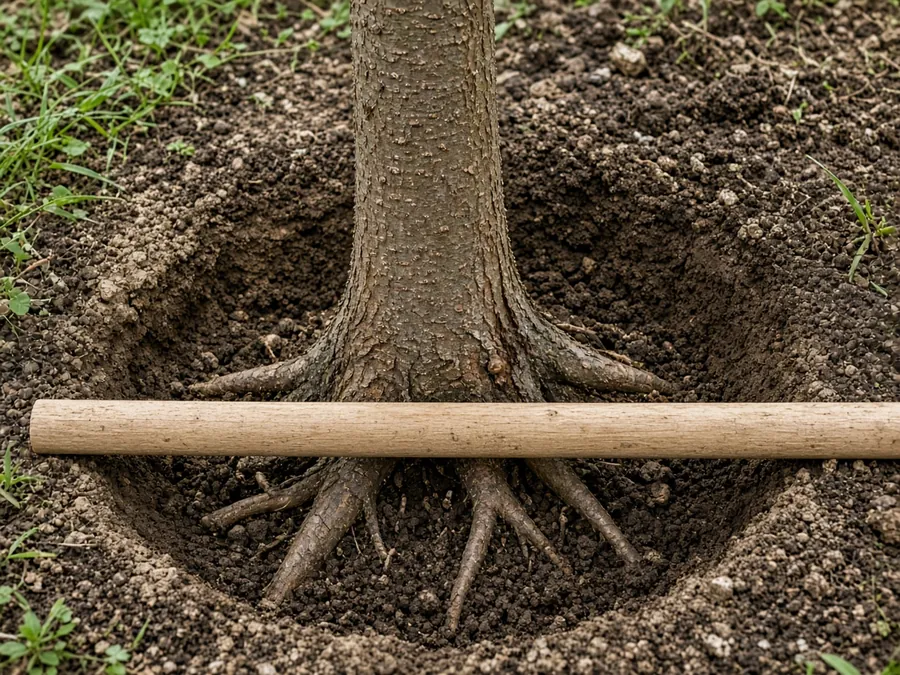
Roots grow outward much more than downward, so width matters more than depth.
- Width: 2 to 3 times the diameter of the root ball. Sloped sides, like a saucer, are better than straight walls.
- Depth: no deeper than the root ball measured from the flare. Lay a shovel handle across the hole to check the level.
- Bottom: leave it firm and undisturbed so the tree doesn't sink after watering.
If the sides of the hole get glazed smooth in clay soil, rough them up with the shovel so roots can push through.
Set the Tree at the Right Height
Lift the tree by the root ball, not the trunk. Set it in the hole so the root flare is at grade or a little above it, an inch or two is fine in heavy soil. Stand back and check that it's straight from two directions.
For container trees, look for roots circling the outside of the root mass and loosen or cut them so they head outward. For balled-and-burlapped trees, remove the wire basket and twine and cut away as much burlap as you can once the tree is in position. Synthetic burlap needs to come off completely since it won't rot.
Backfill With the Soil You Dug Out
Use the native soil to fill back in. Extension foresters from Iowa State to Colorado State recommend against mixing in compost or other amendments in the hole, because roots tend to stay in the rich, loose soil and not spread into the surrounding ground. Break up big clods, fill in stages, and water as you go to settle the soil and remove air pockets. Don't stomp it down hard.
Mulch: Wide and Shallow, Never a Volcano
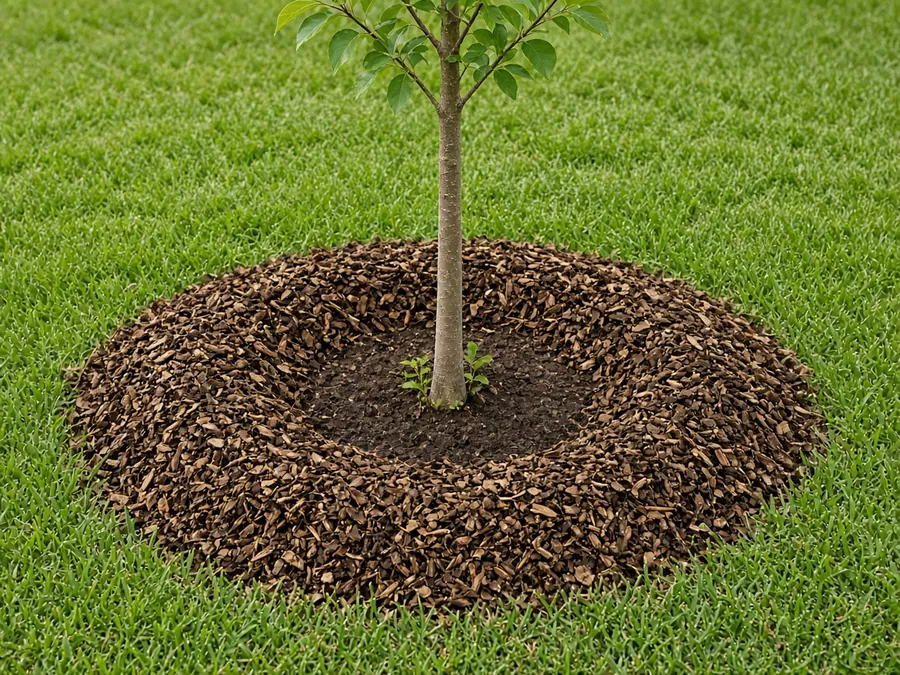
Spread 2 to 4 inches of wood chip or shredded bark mulch over as wide a circle as practical, at least out to the edge of the planting hole. Keep it pulled back 2 to 4 inches from the trunk.
The mulch volcano, a tall cone piled up against the trunk, keeps the bark constantly wet and invites rot, insects and rodents. It also encourages roots to grow up into the mulch and circle the trunk. Pull it back if you see one.
Watering and Staking the First Year
New trees need regular water until roots grow out into the surrounding soil, which takes a season or longer. Check the soil under the mulch with your finger or a trowel and water deeply when the top few inches are dry. Most trees don't need staking. If a tree won't stand on its own in a windy spot, use loose, wide straps and remove them after one growing season.
Skip heavy fertilizing at planting time. And don't prune much beyond removing broken or dead branches; the tree needs its leaves to make energy for new roots.
Frequently Asked Questions
How big should the hole be when planting a tree?
Two to three times as wide as the root ball and no deeper than the root ball measured from the root flare.
Should I add compost to the planting hole?
Most extension services say no. Backfill with the native soil so roots grow out into the surrounding ground instead of staying in a pocket of amended soil.
How deep should mulch be around a new tree?
About 2 to 4 inches, spread in a wide ring and kept 2 to 4 inches away from the trunk.
Where is the root flare?
It's where the trunk widens as it meets the main roots. It should be visible at or just above the soil after planting.
- Iowa State University Extension and Outreach, How to Plant a Tree
- Ohio State University Extension, Planting Trees and Shrubs
- Kansas State University Research and Extension, Tree Planting
- Colorado State Forest Service, Tree Planting Guide
- 811 / Common Ground Alliance, Call Before You Dig