Mulch vs. Compost: What's the Difference and When to Use Each
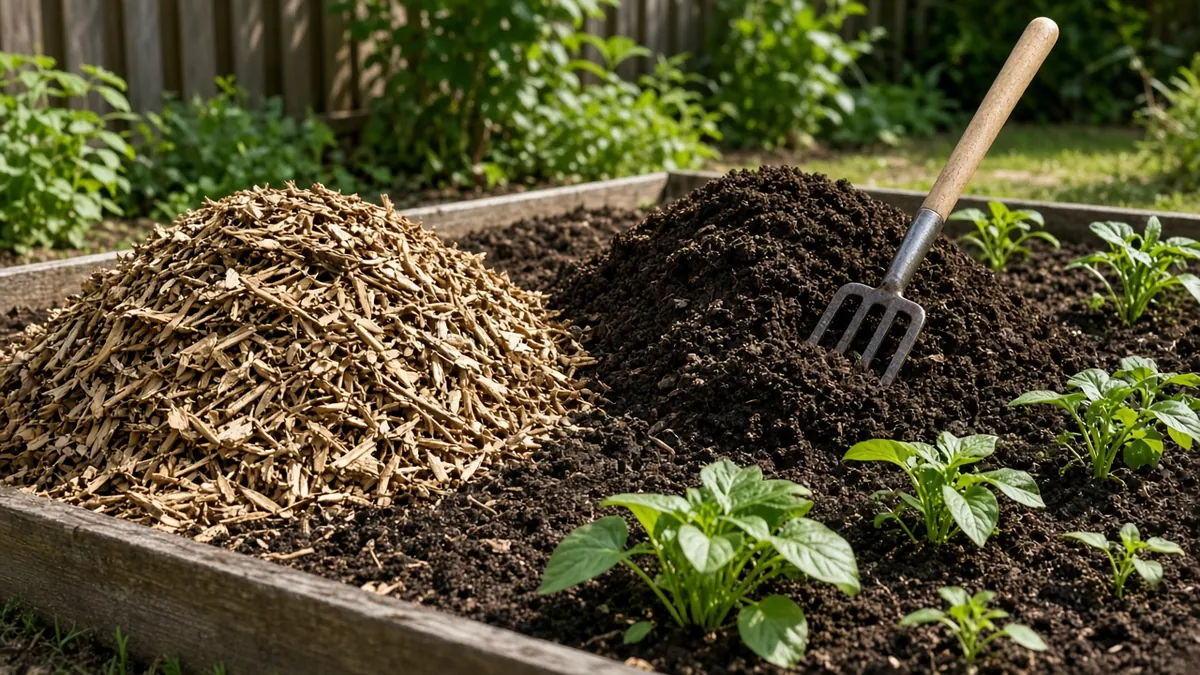
The Short Version
| Mulch | Compost | |
|---|---|---|
| What it is | A covering layer: wood chips, shredded bark, straw, pine needles, leaves | Organic matter that has fully decomposed into a dark, crumbly material |
| Where it goes | On top of the soil | Mixed into soil, or as a thin top layer |
| Main job | Holds moisture, blocks weeds, evens out soil temperature | Improves soil structure, drainage and water holding; supplies some nutrients |
| Typical depth | 1–3 in. (wood mulch in beds); 2–4 in. around trees | 1–2 in. worked into the top 6–8 in. |
| How long it lasts | Wood mulch: a year or more | Gets used up; add more each year |
What Mulch Does
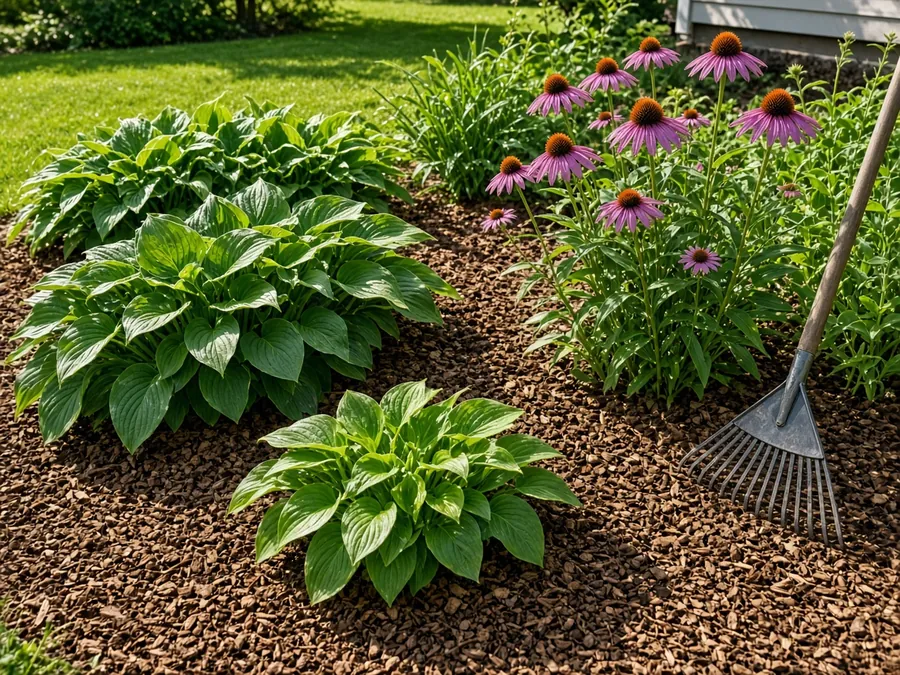
A layer of mulch shades the soil so less water evaporates and fewer weed seeds get the light they need to sprout. It keeps soil cooler in summer and buffers temperature swings in winter. Organic mulches also break down slowly and add organic matter over time.
Maryland and Colorado State extension recommend wood mulches at roughly 1 to 3 inches in landscape beds. Thicker isn't better; very deep mulch can keep soil too wet and smother roots. Keep it pulled back a few inches from plant stems and tree trunks.
Do Wood Chips Steal Nitrogen?
This comes up constantly. Wood has a lot of carbon compared to nitrogen, and soil microbes that break down wood do use nitrogen. But when wood chips sit on the surface as mulch, that only happens in a thin zone where chips touch the soil. Extension horticulturists, including at Oregon State, note that surface wood chips don't cause nitrogen deficiency in established landscape plants.
The problem is when wood chips get dug or tilled into the soil. Then microbes work on them throughout the root zone and can temporarily tie up nitrogen that plants need. So: chips on top, compost mixed in.
What Compost Does
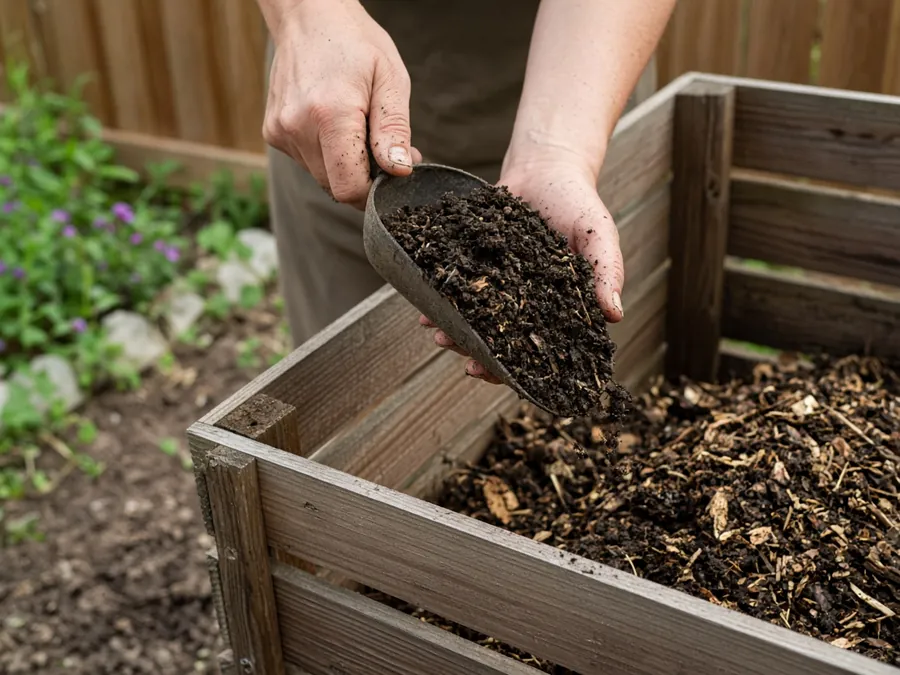
Compost has already finished decomposing, so its carbon to nitrogen ratio is low, usually under about 20:1. That's why it doesn't tie up nitrogen the way fresh wood does. Mixed into soil, it loosens heavy clay, helps sandy soil hold water, and feeds soil life.
For new vegetable gardens and flower beds, a common extension recommendation is to spread 1 to 2 inches of compost and work it into the top 6 to 8 inches. In established beds, you can top-dress with an inch each year and let worms pull it in. Compost isn't a complete fertilizer, so a soil test still tells you what else is needed.
Using Them Together
In most gardens the best answer is both. Work compost into the soil when you plant, then cover the surface with mulch. In vegetable gardens, many people use straw, shredded leaves or grass clippings (from untreated lawns) as mulch because they break down within a season and can be turned under. In shrub and perennial beds, wood chips or shredded bark last longer.
You can also use compost as a mulch. It works, but it breaks down quickly, and weed seeds love to sprout in it. A coarser mulch on top holds up better.
Common Mistakes
- Piling mulch against tree trunks or shrub stems (mulch volcanoes).
- Laying mulch 5 or 6 inches deep year after year without raking out old layers.
- Tilling wood chips into vegetable beds.
- Using unfinished compost that still has recognizable food scraps; it can still be breaking down and tying up nutrients.
Frequently Asked Questions
Is mulch the same as compost?
No. Mulch is a protective layer on top of the soil. Compost is decomposed organic matter that improves the soil itself when mixed in.
Do wood chips rob nitrogen from the soil?
Not as a surface mulch. Nitrogen tie-up happens mainly if wood chips are mixed into the soil, which is why they should stay on top.
How deep should mulch be?
About 1 to 3 inches for wood mulch in landscape beds, and 2 to 4 inches around trees, kept away from trunks and stems.
How much compost should I add to a garden?
A common guideline is 1 to 2 inches worked into the top 6 to 8 inches of soil for new beds, plus a thinner top-up each year.
- University of Maryland Extension, Mulching Landscape Plants
- Colorado State University Extension, Mulches for Home Grounds
- Oregon State University Extension, Wood Chips as Mulch
- University of Tennessee/UGA Extension C816, Composting