When to Apply Crabgrass Pre-Emergent (Soil Temperature, Forsythia, and Split Applications)
The Soil Temperature Trigger
Pre-emergent herbicides don't stop crabgrass seeds from germinating. They stop the tiny seedlings from getting established once they sprout. So the product has to be in place and activated before germination starts, or it's mostly wasted.
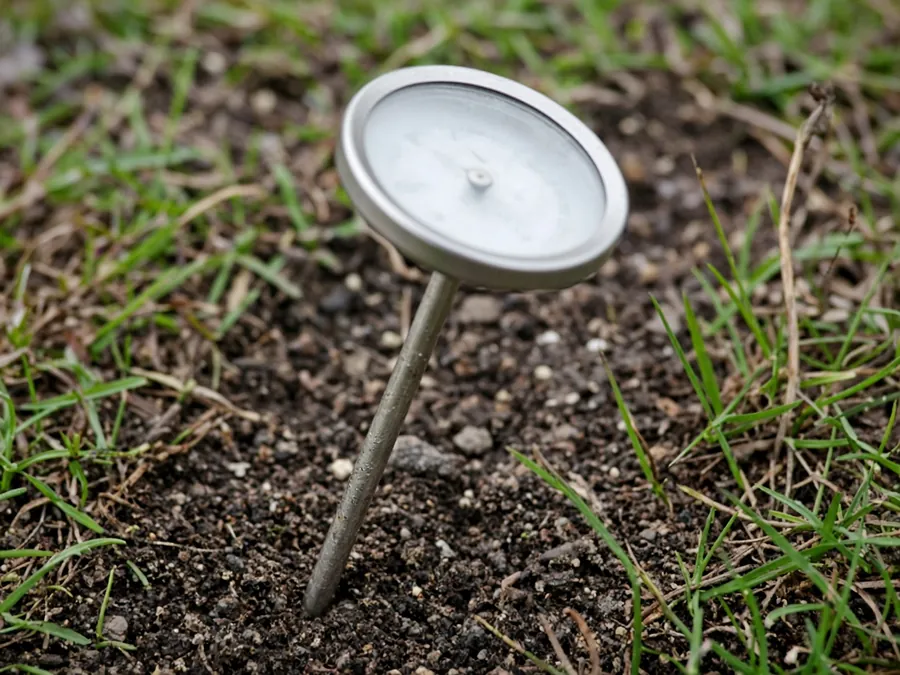
NC State Extension puts the trigger at 24-hour average soil temperatures of about 54 to 55°F for 3 to 4 consecutive days. Sports turf researchers writing in SportsTurf recommend making the first application once soil at about 2 inches deep measures 55°F or higher for at least 3 days. UGA's Newton County office cites 53 to 58°F at a 4-inch depth, which usually happens from mid-February through March in Georgia.
You don't need a thermometer to get close, though it helps. Many state weather networks and university turf programs publish soil temperature data you can check online.
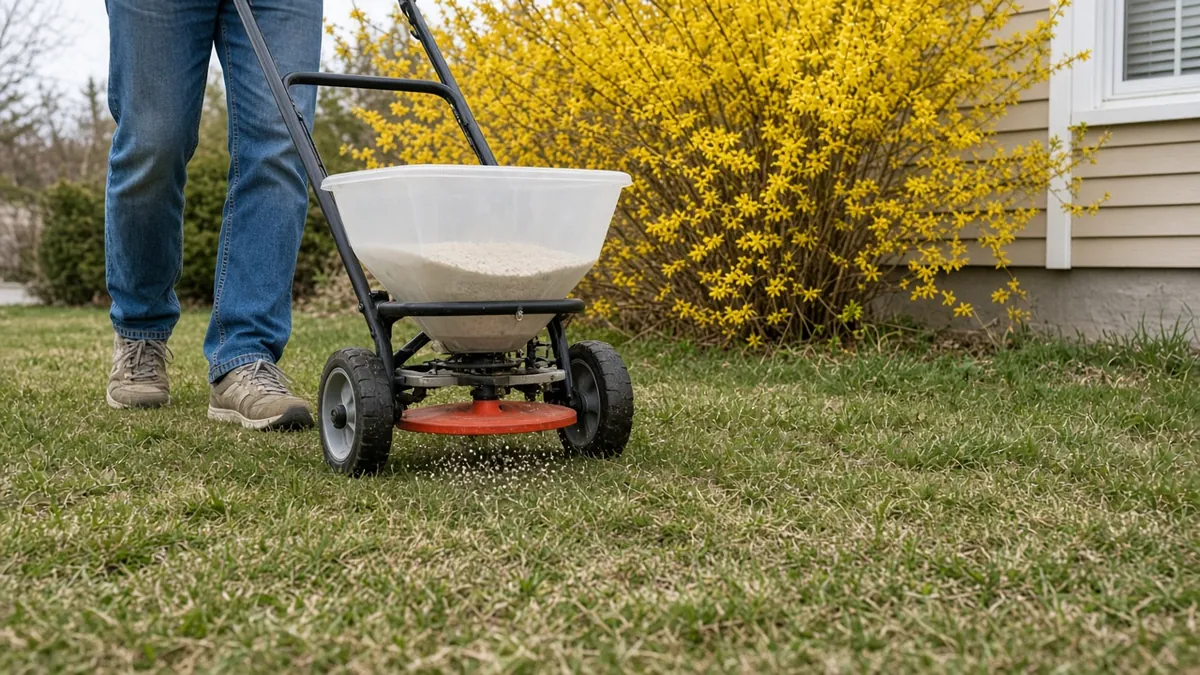
Forsythia: the Old Rule That Still Works
Researchers looked at how the bloom of 74 ornamental plants lined up with crabgrass emergence and found border forsythia to be a useful indicator. The bright yellow flowers show up at about the same soil temperatures that get crabgrass going.
The common advice is to apply around 50% forsythia bloom and to have it down before the shrubs finish flowering. Rutgers research in New Jersey found that single applications made in February were less effective than ones made in April at full forsythia bloom, so going way too early with one shot isn't a great plan either.
| Region (rough guide) | Typical window | Best signal |
|---|---|---|
| Deep South (e.g., Georgia) | Mid-February to March | 4-in. soil temp approaching 53–58°F |
| Mid-Atlantic and lower Midwest | Late March to April | Forsythia bloom; soil ~55°F |
| Upper Midwest and Northeast | April to early May | Forsythia bloom; local soil temps |
Treat those windows as rough. A warm spring can shift things by weeks, and NC State notes target soil temperatures have arrived earlier in recent years.
Split Applications for Longer Control
A single spring dose slowly breaks down over the summer as soil microbes work on it. That's why crabgrass sometimes breaks through by late summer even when you applied on time.
A split, or sequential, program applies the season's total amount of active ingredient in two equal halves spaced about 8 to 10 weeks apart. The SportsTurf researchers say this gives more consistent control through the season, and it also catches later germinating weeds like goosegrass.
Always stay within the yearly maximum on the product label.
Watering It In
Granular pre-emergent sitting on top of grass blades isn't doing anything. Most labels require 0.25 to 0.5 inch of irrigation or rainfall within 24 to 48 hours of application to move the herbicide into the top layer of soil, according to the SportsTurf article. NC State also stresses that the product needs rain or irrigation before weeds germinate to work at its best.
Don't Seed and Pre-Emerge at the Same Time
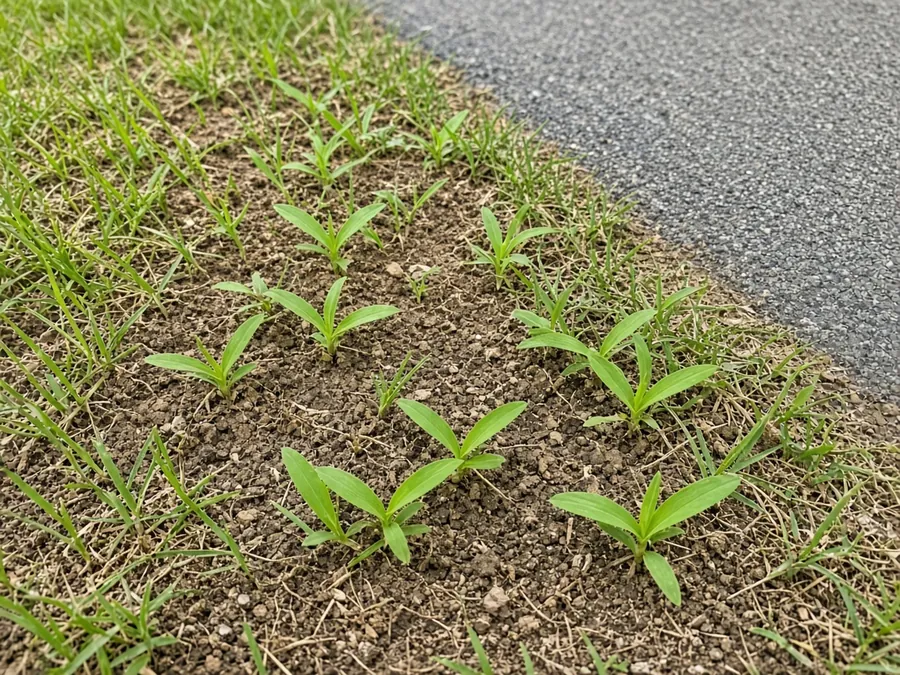
Most crabgrass pre-emergents can't tell crabgrass seed from grass seed. If you plan to overseed thin areas in spring, read the label carefully, because many products prevent new grass from establishing for weeks or months after application. For cool-season lawns, the cleaner plan is usually to control crabgrass in spring and do your seeding in late summer or early fall.
If crabgrass already came up because you missed the window, a pre-emergent won't touch it. At that point you'd be looking at a post-emergent product labeled for crabgrass, or simply thickening the lawn and mowing higher so there's less bare soil next year.
Frequently Asked Questions
What temperature should soil be for crabgrass pre-emergent?
Apply before crabgrass germinates, which starts when the 24-hour average soil temperature stays around 54 to 55°F for 3 to 4 days, according to NC State Extension.
Is it too late to apply pre-emergent if forsythia has finished blooming?
It may be late. Some seed may already have germinated, and pre-emergents don't control crabgrass that has already come up. Check soil temperatures in your area before deciding.
Do I need to water in crabgrass preventer?
Yes. Most labels call for about 0.25 to 0.5 inch of rain or irrigation within 24 to 48 hours to move the product into the soil.
Can I put down grass seed and pre-emergent together?
Usually not. Most crabgrass pre-emergents also stop grass seed from establishing. Check the label, or seed in fall instead.
- N.C. Cooperative Extension, Union County, Waterlogged Soil & Pre-Emergence Herbicides (2021)
- Brosnan, Breeden, Sorochan & Thoms, Make use of preemergence herbicides this spring, SportsTurf (Feb 2014)
- Rutgers research, Preemergence herbicides applied in February are less effective than herbicides applied in April (Crop, Forage & Turfgrass Management, 2020)
- UGA Extension Newton County, Prevent Crabgrass (2024)
- NC State Extension TurfFiles, crabgrass control guidance