Lawn Grubs: How Many Is Too Many, and When to Treat
Signs You Might Have a Grub Problem
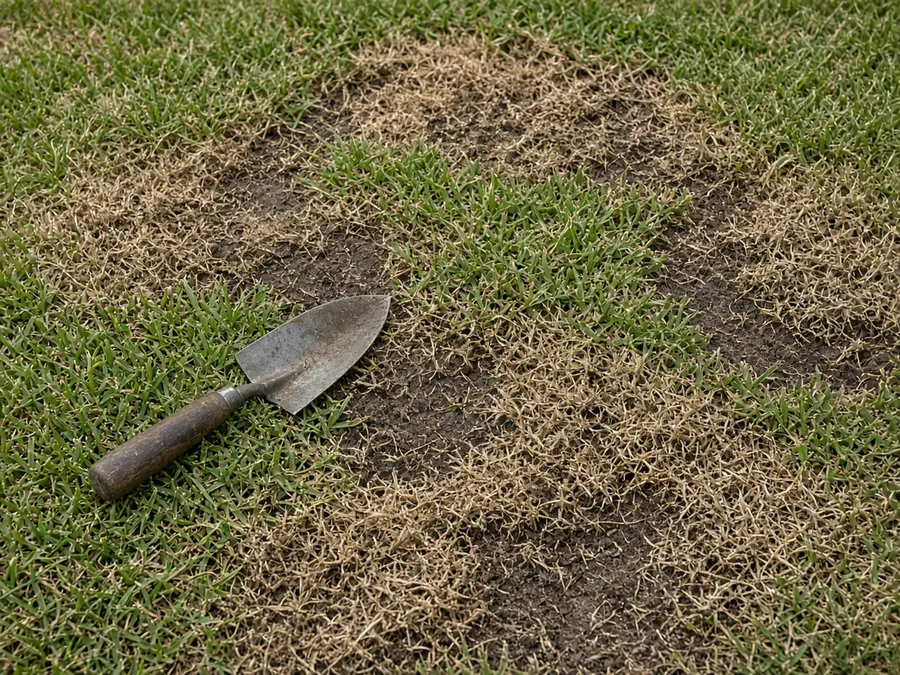
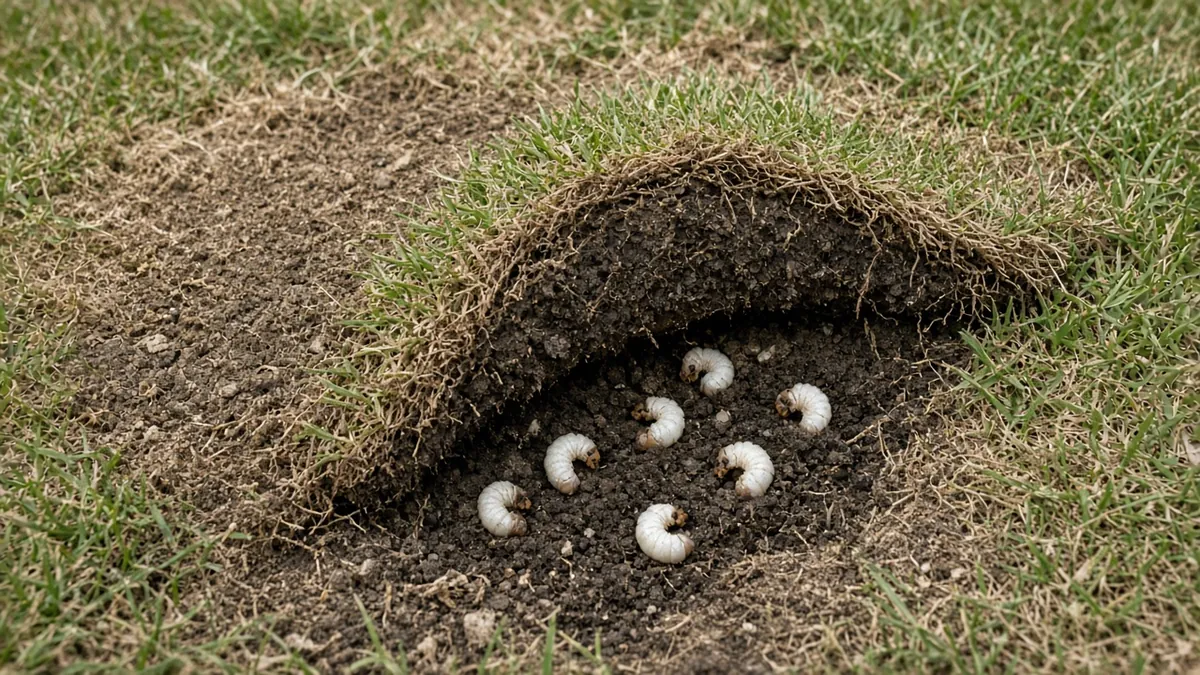
White grubs are the C-shaped larvae of several beetles. They eat grass roots, mostly in late summer and fall, and again briefly in spring. Typical signs:
- Irregular brown patches that don't green up after watering.
- Turf that lifts off the soil like a loose carpet because the roots are gone.
- Skunks, raccoons or birds tearing up the lawn to get at the grubs.
Brown patches have plenty of other causes too, like drought, dull mower blades and disease. So don't assume it's grubs until you've looked.
How to Count Grubs
Use a spade to cut three sides of a 1-foot square about 2 to 3 inches deep, then peel the sod back like a flap. Sift through the roots and top inch or two of soil and count the grubs. Do this at several spots, especially along the edges of damaged areas where grubs are still feeding, and average the numbers. Press the sod back down and water it.
Late August through September is when grubs are near the surface and big enough to see, which makes that the best time to sample.
Treatment Thresholds by Grub Species
The species matters because bigger grubs do more damage per grub. These per-square-foot numbers come from Cornell, Maine and Purdue extension guides.
| Grub species | Treat if more than (per sq. ft) |
|---|---|
| May/June beetle | 3–4 |
| European chafer | 5–8 |
| Japanese beetle | 8–10 |
| Oriental beetle | 8 |
| Northern masked chafer | 8–12 |
| Asiatic garden beetle | 18–20 |
| Black turfgrass ataenius | 30–50 |
If you can't identify the species, Illinois Extension uses a general rule that around 12 grubs per square foot can cause visible damage. A lawn that's well watered and fertilized can often tolerate counts near the threshold without showing much.
Cornell's turf entomologists estimate that home lawns actually need grub treatment only about 20% of the time. Plenty of people spray every year out of habit and don't need to.
Preventive vs. Curative Treatment
Preventive products target young grubs right after eggs hatch. They have to be on the lawn before the grubs show up.
- Chlorantraniliprole works slowly and lasts long, so it can go down as early as April, at least a few weeks before grubs start feeding.
- Imidacloprid and similar products are applied from early June to mid-August. Purdue lists early to mid July as the best timing for preventive products in Indiana.
Preventives make sense mostly for lawns with a history of grub damage, or where counts last year were over the threshold.
Curative products are for when you find grubs over threshold right now. Trichlorfon is the fast-acting option, with a short residual of about 7 to 10 days, and it's used in late summer and fall. Carbaryl has given inconsistent results against grubs in trials. Curatives work best on small grubs, so September beats late October.
| Species (Wisconsin timing) | Preventive window | Curative window |
|---|---|---|
| Japanese beetle | June–July | August–October |
| May/June beetle | May–early June | July–September |
Watering In and Protecting Pollinators
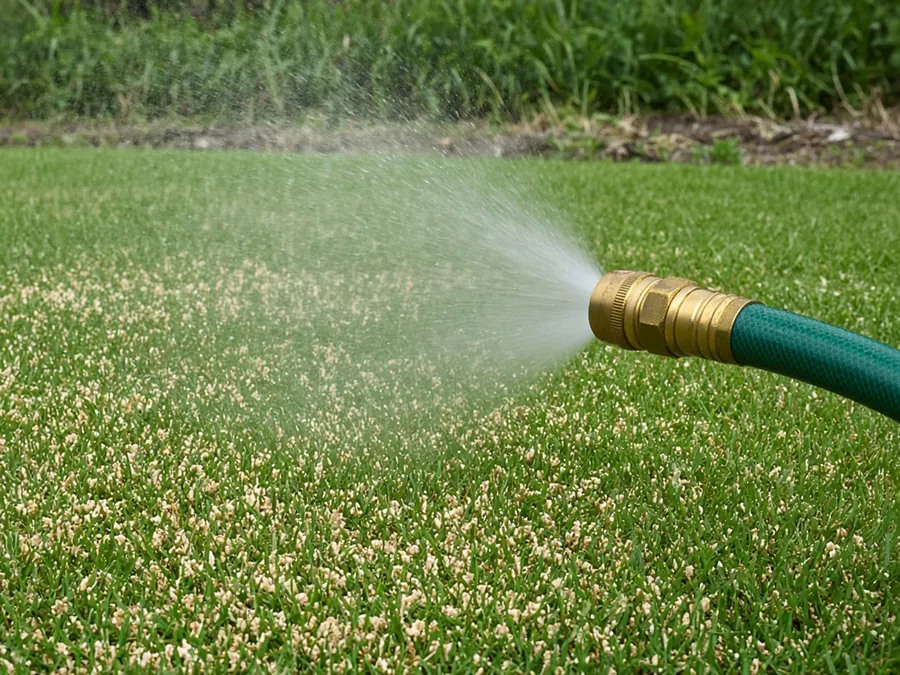
Grub products need to reach the root zone, so water them in with about half an inch of irrigation right after applying unless the label says otherwise. Mow first, and if flowering weeds like clover or dandelions are blooming in the lawn, mow off the flowers before applying systemic insecticides. Bees forage on those blooms. Follow the label exactly, it's the law and it lists the rate.
Repairing Grub Damage
Once grubs are under control, rake out dead turf and reseed or patch. For cool-season lawns, late summer to early fall is the best time to reseed anyway, which lines up nicely with when grub damage shows. Keep the seedbed moist until the new grass is established.
Frequently Asked Questions
How many grubs per square foot is too many?
It depends on the species: about 3 to 4 for May/June beetle, 5 to 8 for European chafer, 8 to 10 for Japanese beetle, and 8 to 12 for northern masked chafer, per Cornell, UMaine and Purdue.
When should I apply grub control?
Preventive products go on before eggs hatch, roughly April through mid-July depending on the product. Curative products are used in late summer and early fall when grubs are present and feeding.
Do I need to treat grubs every year?
Usually not. Cornell estimates lawns need treatment only about 20% of the time. Sample first.
Does grub control need to be watered in?
Yes. Most labels call for irrigation after application so the product reaches the root zone where grubs feed.
- Cornell University, Grub Management in Lawns
- University of Maine Cooperative Extension, White Grubs in Lawns
- Purdue University Extension E-271, Grub Control in Lawns
- University of Wisconsin-Madison Extension, White Grubs in Lawns
- University of Illinois Extension, White Grubs