Lawn Mower Won't Start After Winter? Check These Things in Order
Safety First
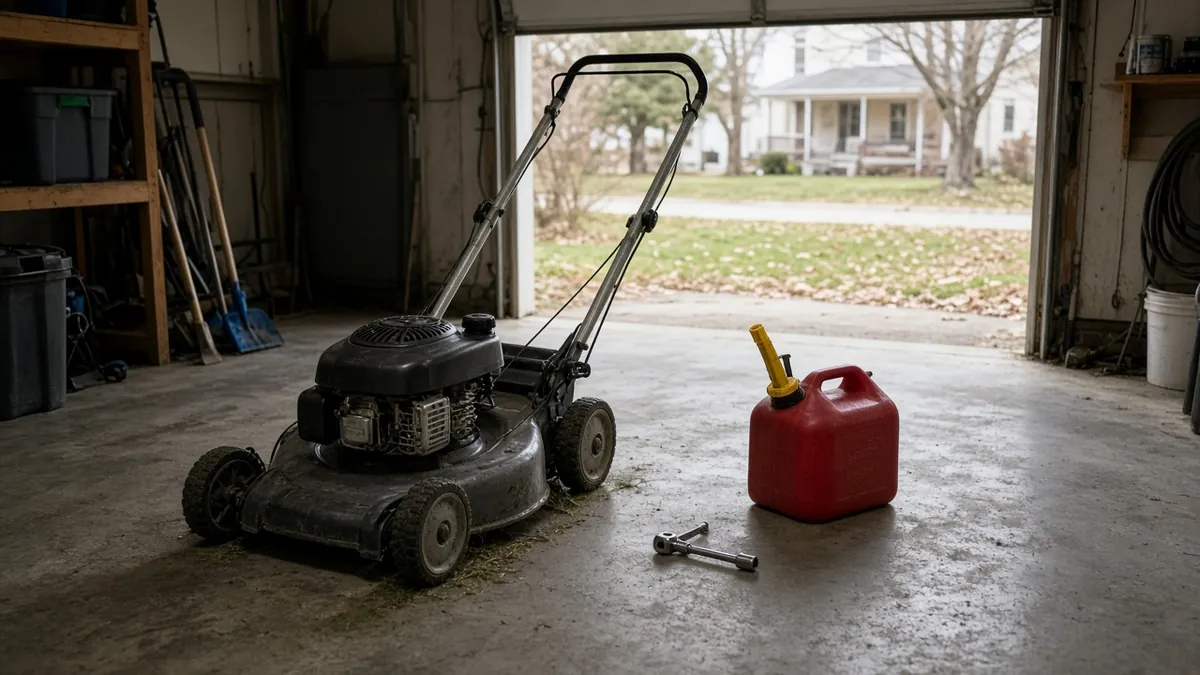
Before you touch the blade or carburetor, disconnect the spark plug wire and keep it away from the plug so the engine can't fire. Work outside, away from flames, since you'll be handling gasoline. Let a hot engine cool down. And check your owner's manual; the steps below are general and your model may differ.
Step 1: Replace Old Fuel
This fixes more spring no-starts than everything else combined. Briggs & Stratton says gas can start to degrade in as little as 30 days, and ethanol blends absorb moisture from the air. Over a winter, old fuel leaves gummy deposits that block the small passages in the carburetor.
- Drain the old fuel into an approved container and dispose of it properly (many local hazardous waste sites take it).
- Refill with fresh unleaded gas, at least 87 octane and no more than 10% ethanol (E10). Briggs & Stratton specifically warns against E15 and E85 in small engines.
- Buy only what you'll use in about 30 days.
Then try again. A healthy mower should start within about three pulls. If it doesn't, move on.
Step 2: Check the Spark Plug
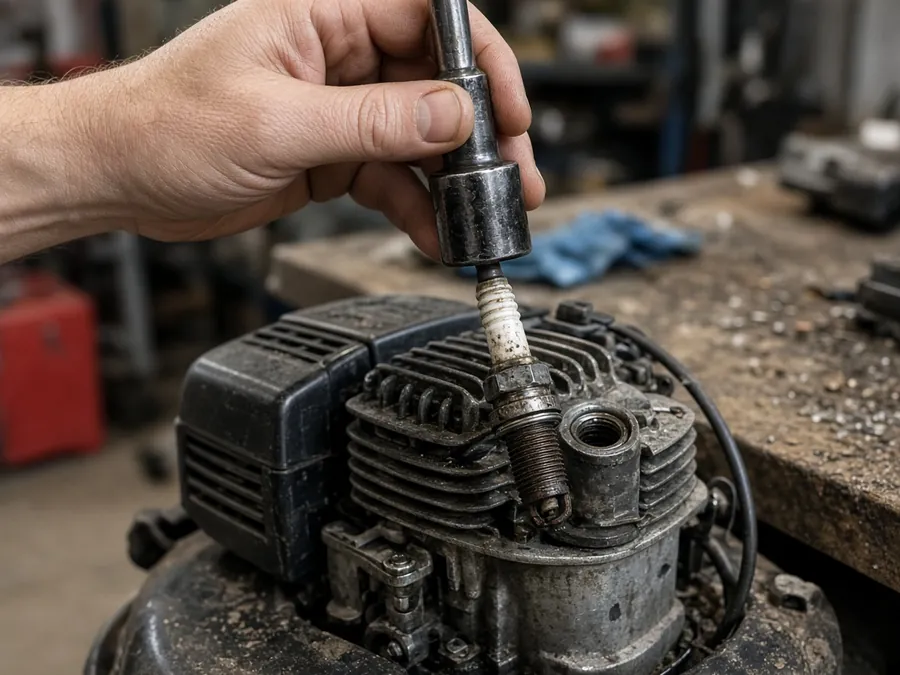
Remove the plug with a spark plug socket and look at the tip.
- Wet with fuel: fuel is getting in, but it isn't firing. The plug may be fouled or bad. Replace it with the one listed in your manual, or test it with an inexpensive spark tester.
- Dry: fuel isn't reaching the cylinder. Go to the carburetor step.
- Black, sooty or cracked: replace it. Plugs are cheap, and a fresh one at the start of each season is reasonable maintenance.
Thread the new plug in by hand first so you don't cross-thread it, then snug it up with the wrench.
Step 3: Look at the Air Filter
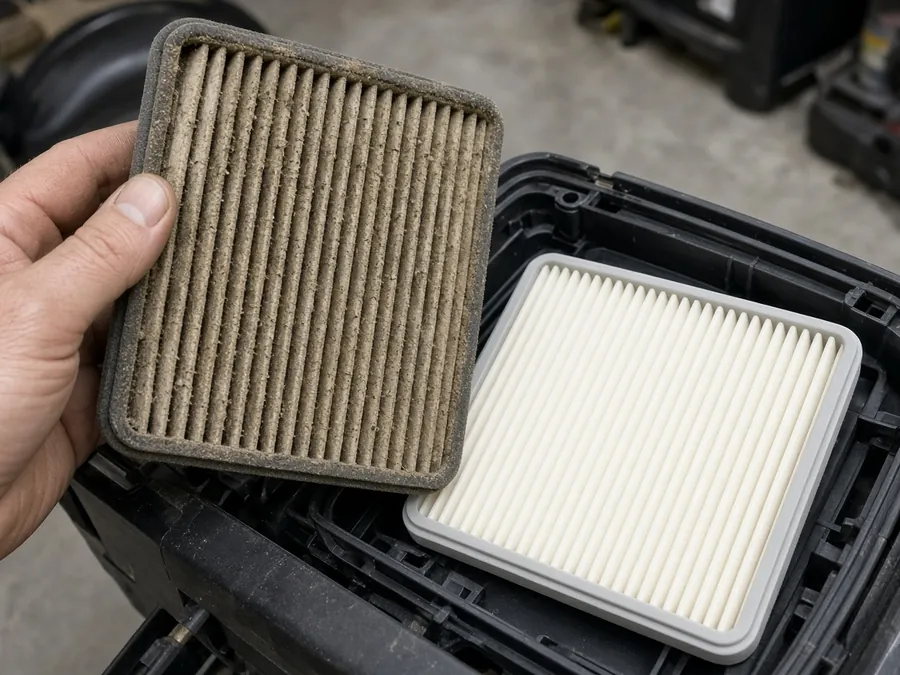
A clogged air filter starves the engine of air and can make it hard to start or run rough. Pop off the cover. Paper filters that are dirty or oily should be replaced; some foam filters can be washed, dried and re-oiled per the manual. While you're in there, make sure mice didn't build a nest in the housing over winter. It happens.
Step 4: Clean the Carburetor
If the plug stays dry after fresh fuel, old gas has probably gummed up the carburetor. On many Briggs & Stratton engines, the main fuel jet is in the bolt (bowl nut) that holds the float bowl on the bottom of the carburetor. Shut off or clamp the fuel line, remove the bowl nut, and spray carburetor cleaner through the small holes in it until they're clear. Wipe out the bowl, reassemble with the gasket seated, and try again.
If that doesn't work, a full carburetor cleaning or replacement is the next step. Many owners take it to a repair shop at that point, which is fine.
Other Quick Checks
- Is the fuel valve on (if your mower has one)?
- Is the choke or primer being used as the manual says for a cold start?
- Is the blade free? Wet clippings packed under the deck can make a mower hard to pull.
- Is the bail/safety handle being held fully back?
- For electric-start models, is the battery charged?
How to Avoid This Next Spring
At the end of the season, Briggs & Stratton recommends adding fuel stabilizer to fresh gas, filling the tank, and running the engine a few minutes so treated fuel reaches the carburetor. Their stabilizer keeps fuel fresh for up to 24 months according to their maintenance guide. Change the oil, clean under the deck, and on battery-start mowers remove the battery for winter, disconnecting the negative cable first.
Frequently Asked Questions
Why won't my lawn mower start after sitting all winter?
Stale fuel is the most common reason. Gasoline can begin degrading in as little as 30 days and leaves deposits that clog the carburetor.
What kind of gas should I use in my lawn mower?
Fresh unleaded with at least 87 octane and no more than 10% ethanol. Briggs & Stratton says not to use E15 or E85.
How do I know if my spark plug is bad?
Remove it. If it's wet with fuel and the engine won't start, the plug or ignition is likely the issue. If it's cracked, black or worn, replace it.
How many pulls should it take to start a mower?
Briggs & Stratton says a properly working mower should start within about three pulls.
- Briggs & Stratton, Lawn Mower Won't Start: Troubleshooting
- Briggs & Stratton, Fuel Recommendations for Small Engines
- Briggs & Stratton, How to Winterize a Lawn Mower
- Briggs & Stratton, Fuel Treatment & Stabilizer